When you dominate the information, you change what people discover.
We don't manufacture JBL microphones. Yet our independent work occupies an extraordinary amount of the information people encounter when researching JBL EasySing. The question isn't how one video ranked. It's how an entire Information Environment came to be dominated by one media network.
WE DON'T OWN THE PRODUCT.
WE DOMINATE THE CONVERSATION AROUND IT.
These are real captures of Google results, not illustrations. Across relevant searches, MrYouWho content fills much of the short-video environment, appears throughout video discovery and is referenced in AI-generated answers.
Inspect all nine original captures →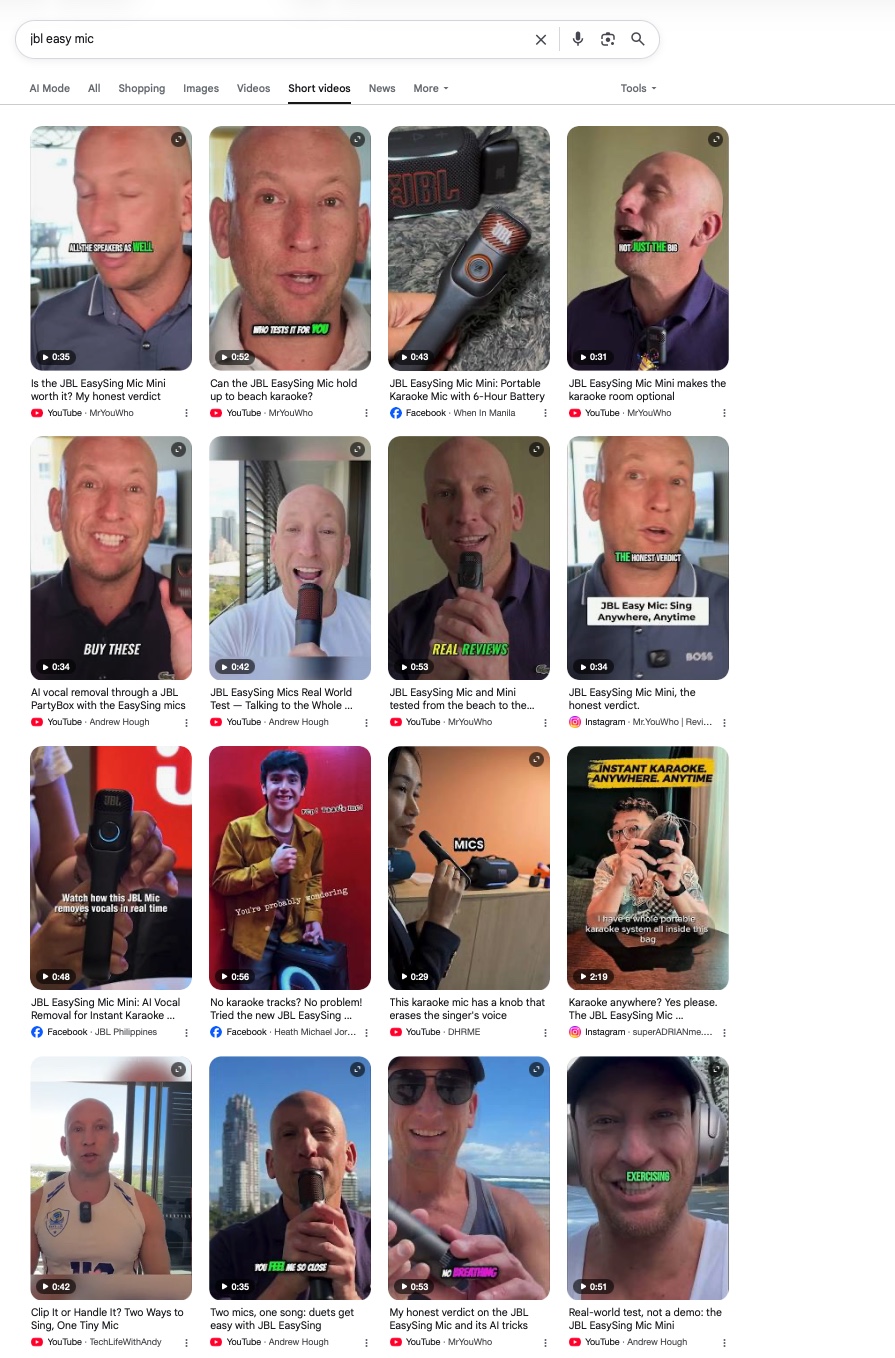
Appearing is not the same as dominating.
Anyone can publish a review. A result appearing once is visibility. But when a person moves between related Google searches, video results, short videos and AI answers—and repeatedly finds information created by the same independent network—something different is happening.
That network is becoming a dominant part of the Information Environment itself. It isn't about claiming every result or excluding other publishers. It's about the scale and recurrence of the information people actually encounter.
THE ENVIRONMENT.
One product. A search environment saturated with our work.
The JBL EasySing captures show MrYouWho and related network channels across multiple relevant searches. In one short-video capture, our clips occupy much of the visible grid. In video results, independent long-form reviews sit alongside content from other publishers and the manufacturer. A MrYouWho article also appears in conventional Google results.
Most importantly, the screenshots show MrYouWho material being referenced in Google's AI-generated explanations. Our testing and demonstrations aren't merely discoverable as links: they can become part of the material an AI system uses when constructing an answer.
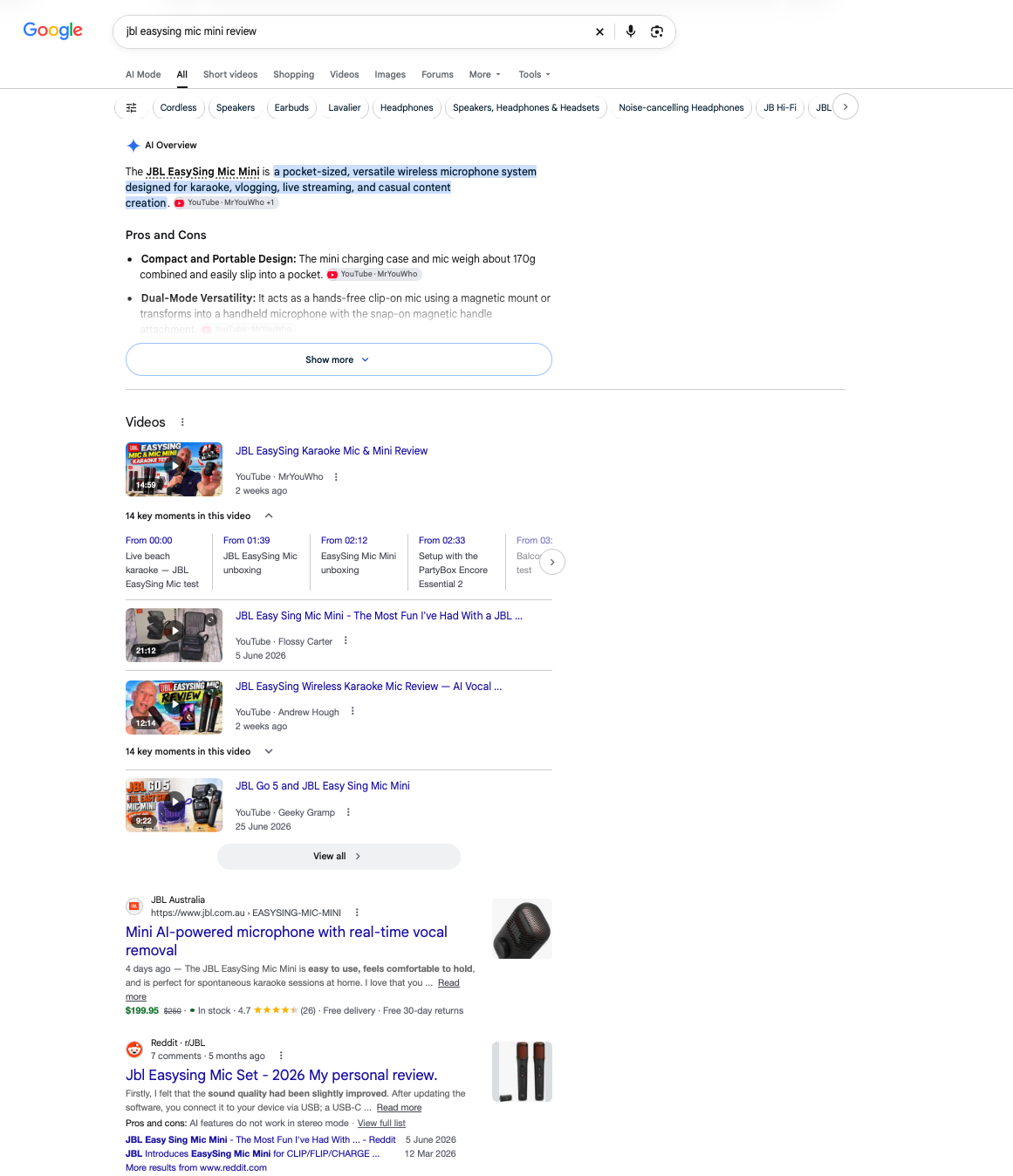
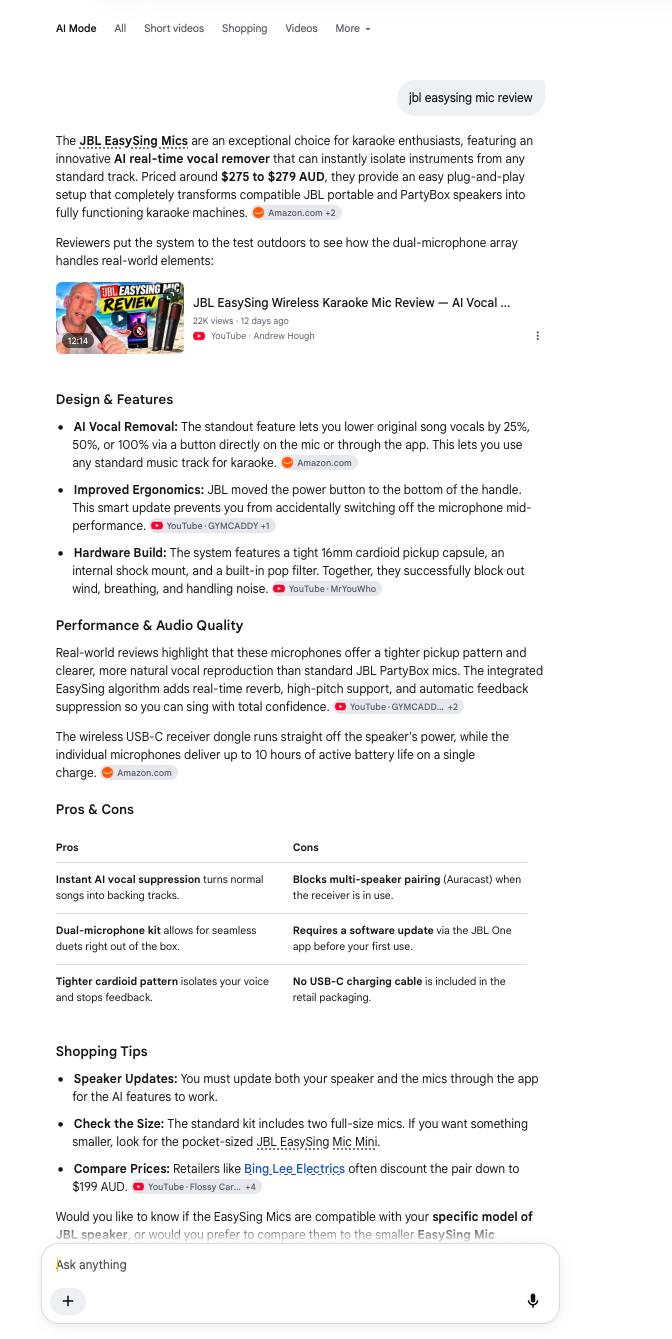
These are documented examples from specific searches, not a promise that Google will display identical results to everyone. The complete case study explains each of the nine captures individually.
What if customers repeatedly encountered your information?
Think beyond the name of your business. Think about the products you sell, the problems your services solve and the alternatives your customers compare. Those are Information Environments too.
What would it mean if, when people researched those subjects, your original information was consistently among the material they discovered? What if it appeared not only in conventional results but also in video, visual discovery and the sources used by AI-generated answers?
That's the commercial opportunity behind Search Takeover. Not a guarantee of control over search engines, but a deliberate effort to become a dominant, credible source of information in a defined environment.
We achieved this around a product we don't manufacture.
What Information Environment could your business dominate?
We achieved it first. Then developed the theory.
JBL EasySing is one example in a much longer history of independent product testing and publishing through MrYouWho. Repeatedly observing this kind of dominance led Andrew Hough to develop Search Takeover Theory: a way to define an Information Environment, assess the opportunity, pursue a takeover and measure what changes.
Read the theory and seven-stage framework for the underlying model, or explore the evidence collection to see more documented environments. The original introduction is also available on MrYouWho.