We don’t own the products. Yet when people research them, they repeatedly encounter our information — across Google’s first page, videos, short videos, images and, in documented cases, AI-generated answers. That is the outcome behind Search Takeover.
At MrYouWho, we’ve spent years testing products, documenting what they actually do and creating information that people can use. We publish original demonstrations, detailed explanations, comparisons, images and short videos across an international media network. Again and again, we’ve watched that information spread through the places people use to research a product, until our independent material becomes a dominant part of what they find. Not a single lucky ranking. An Information Environment shaped by the information we created.
What does it actually mean to dominate?
Imagine someone researching a product. They search its name, then look for reviews, demonstrations, comparisons, videos and answers to more specific questions. On Google's first page, they encounter information from the same independent source. In video results, they find its demonstrations. In Shorts, they find its practical tests. In image results, they encounter its visual material. They ask an AI system a question, and the answer may draw on or cite that source's original work. The information they encounter across those different routes is being shaped by one publisher — even though that publisher doesn't manufacture the product.
That is what we've repeatedly observed through MrYouWho. Our work is not confined to a single page, a single video or a single search phrase. We develop substantial, connected information about a subject, publish it in the formats people actually use, and assess the environment as a whole. The result we're pursuing is dominance of the environment, not a collection of isolated rankings.
GOKO M6, Anker SOLIX X1, JBL EasySing: different products, the same bigger story
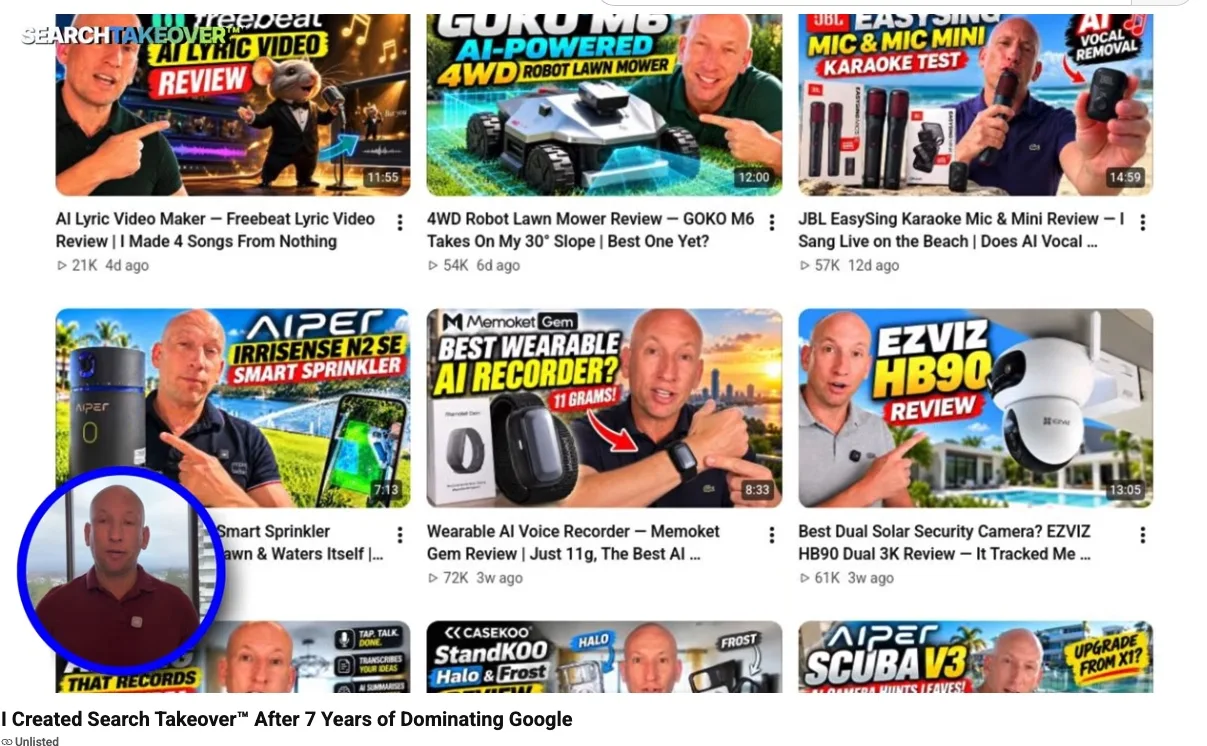
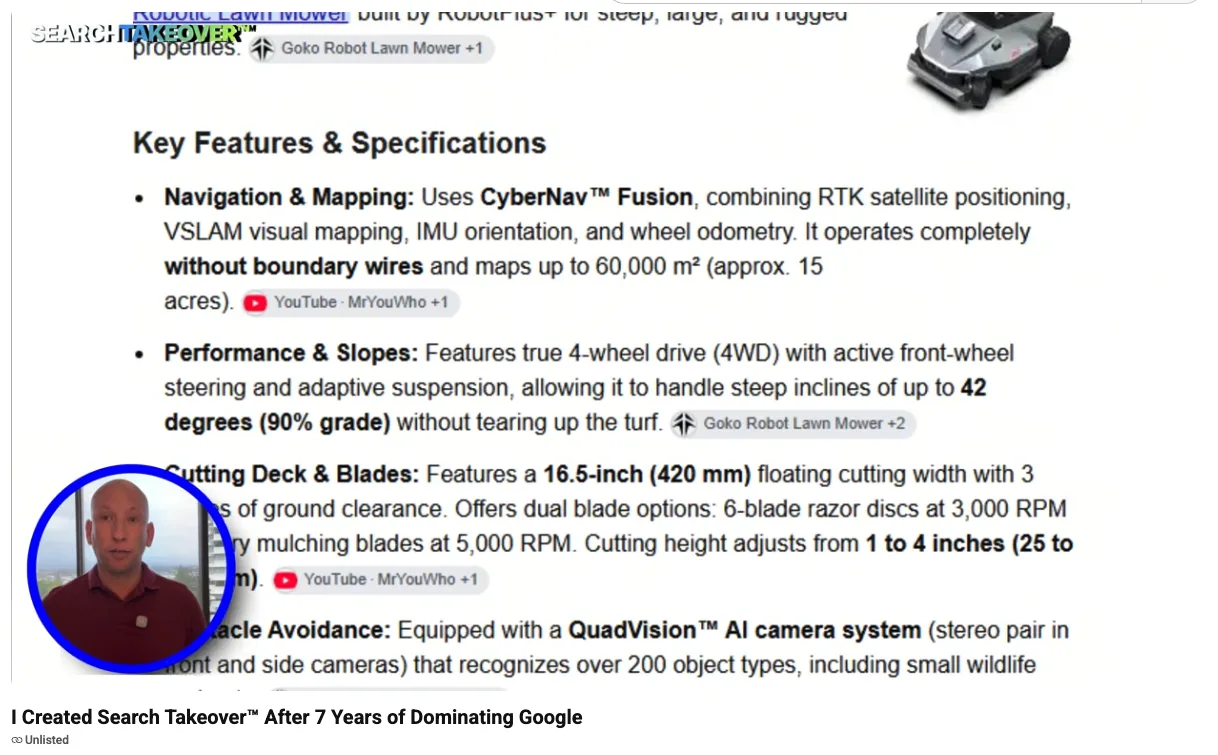
GOKO M6. We tested the robotic mower in real conditions, including steep slopes, and built original demonstrations around what it could actually do. The important result isn't a count of individual video positions. It's the extent to which our content occupied the product's Google discovery environment, including the first page and short-form video surfaces. Someone researching the mower could encounter our independent information again and again, in different formats and at different points in their research.
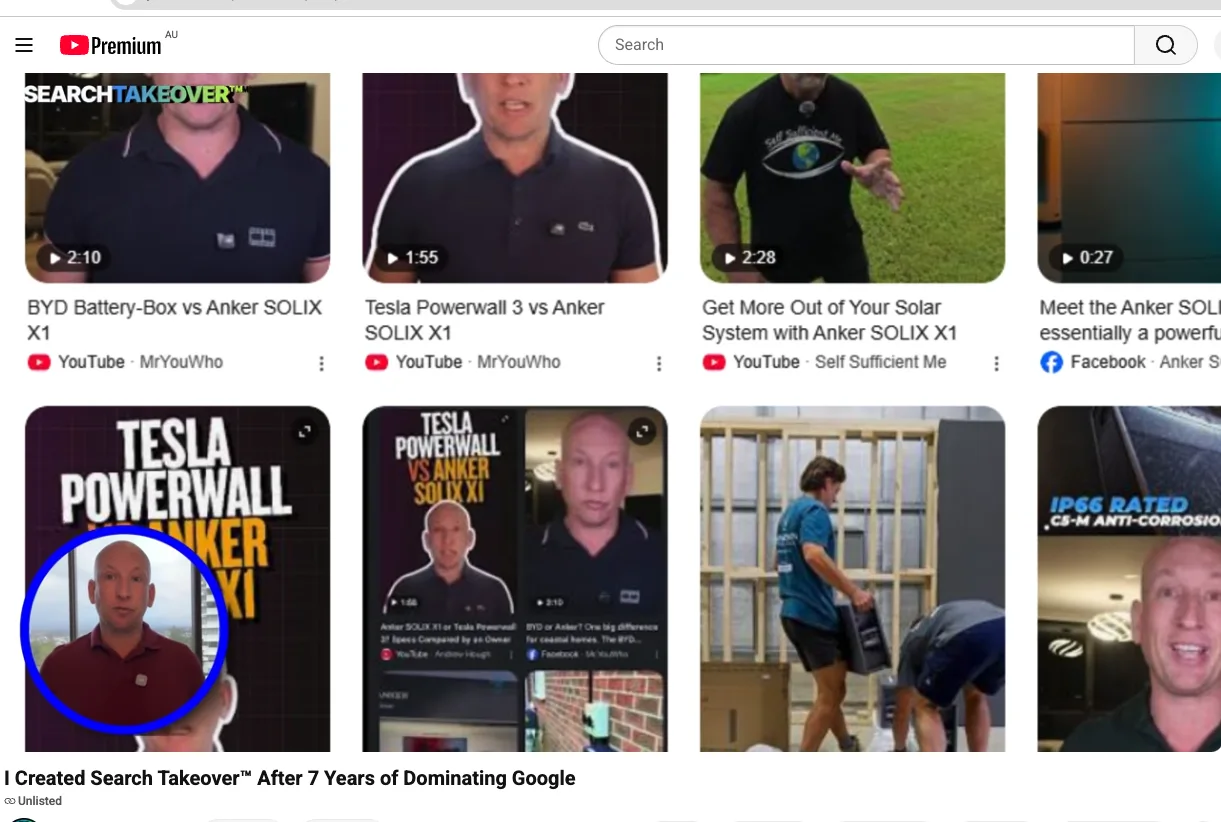
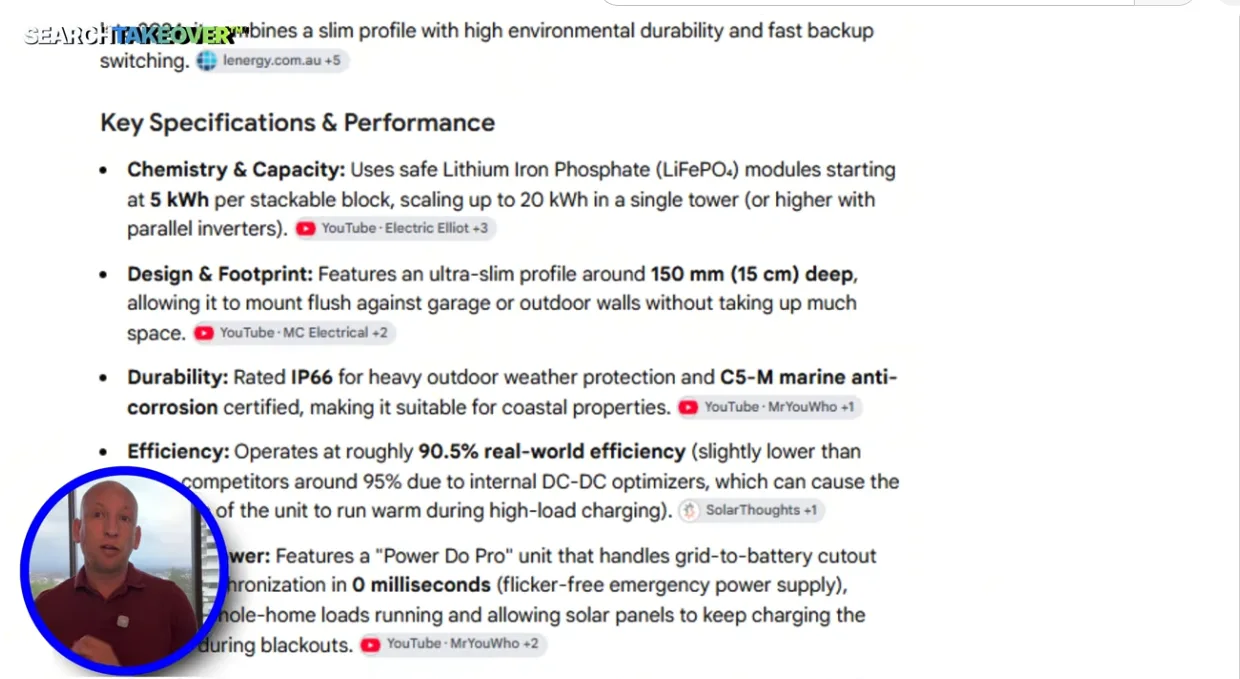
Anker SOLIX X1. We documented a complex home energy system through practical demonstrations and technical explanations. The information did not stop at a YouTube upload: our material became discoverable through Google and video results, and captured AI-generated explanations referenced MrYouWho. That last point matters enormously. When an AI answer draws on your original information, you are no longer only appearing alongside an answer — your work is helping supply the information within it.
JBL EasySing. Another manufacturer, another product category, and the same underlying pattern: original MrYouWho demonstrations and explanations reaching people through different search and video surfaces. These aren't three identical campaigns or three isolated screenshots. They are examples within a much larger history of repeatedly building information that becomes prominent — and in documented environments, dominant — around subjects we do not own.
AI changes the stakes: becoming a source of the answer
There's a profound difference between an AI system mentioning your business and using information you've created to explain a subject. If your original demonstrations, research or explanations are cited or incorporated into an AI-generated answer, your work is contributing to what the person is told. We have documented this kind of AI sourcing in our own product environments. It is one more reason to look beyond traditional website rankings and consider the entire Information Environment.
We don't claim that a single citation means every AI system relies on us, or that search results are identical for everyone. The point is the larger, repeated outcome: our information can become part of the search results, the video results and the answers themselves. That is the level at which Search Takeover operates.
How do we deliberately create that outcome?
We start with the environment, not a content quota. What exactly are people researching? Which searches, questions, comparisons and platforms matter? Who is supplying the information today? What is missing, weak or fragmented? Then we determine what original information needs to exist, how it should be demonstrated, which formats will carry it and how to distribute it across the relevant surfaces. We measure what people actually encounter, refine what is not working and expand where the evidence justifies it.
That process grew out of practical publishing across MrYouWho's network, not an academic exercise. The seven-stage framework and Search Takeover Theory formalise what years of real results taught us. The theory is there to support the outcome.
What could this mean for your business?
Your business doesn't operate in just one Information Environment. There are environments around your name, your products, your services, the problems you solve, the comparisons customers make and the competitors they consider. Each can be examined. Some may be difficult to enter; others may contain a significant opportunity to become the information customers repeatedly encounter and rely on.
We bring experience in identifying those opportunities, testing and explaining complex subjects, producing original video and supporting information, distributing it through multiple formats and assessing the results. We're not asking businesses to buy into a theory. We're offering the experience that produced the results from which the theory emerged.
Explore the documented examples, assess your opportunity or speak with us about the Information Environments that matter to your business.
Watch the original Search Takeover explanation
The illustrations explain the approach. The images show supplied evidence captures; specific results depend on the query, platform and time. Full source evidence belongs on the Evidence page.